GRYT MDM.DATA
GRYT MDM.DATA is a market data management system that stores time-series data from various data sources. It provides the users with a self-service framework for managing, analyzing, and processing data. The solution offers an agile import and export framework for file-based data as well as REST APIs for data analytics and visualization. The build-in data feed management has a short time-to-market and enables the automation of data-driven processes in the fast-paced trading environment. Audit and compliance features, as well as the core data management capabilities of capture, store, monitor, and use, are also provided by GRYT MDM.DATA solution.
Key benefits for using GRYT MDM.DATA are:
- REST APIs for data analytics and visualization compatible with Excel and PowerBI.
- An agile framework to configure file imports and exports that can service legacy systems.
- Automatic data validation on a time series level based on rule definitions.
All the above-listed components are customizable and made to fit business needs and requirements.
This user manual is intended for users, feed developers, and system administrators of GRYT MDM.DATA.
Solution architecture
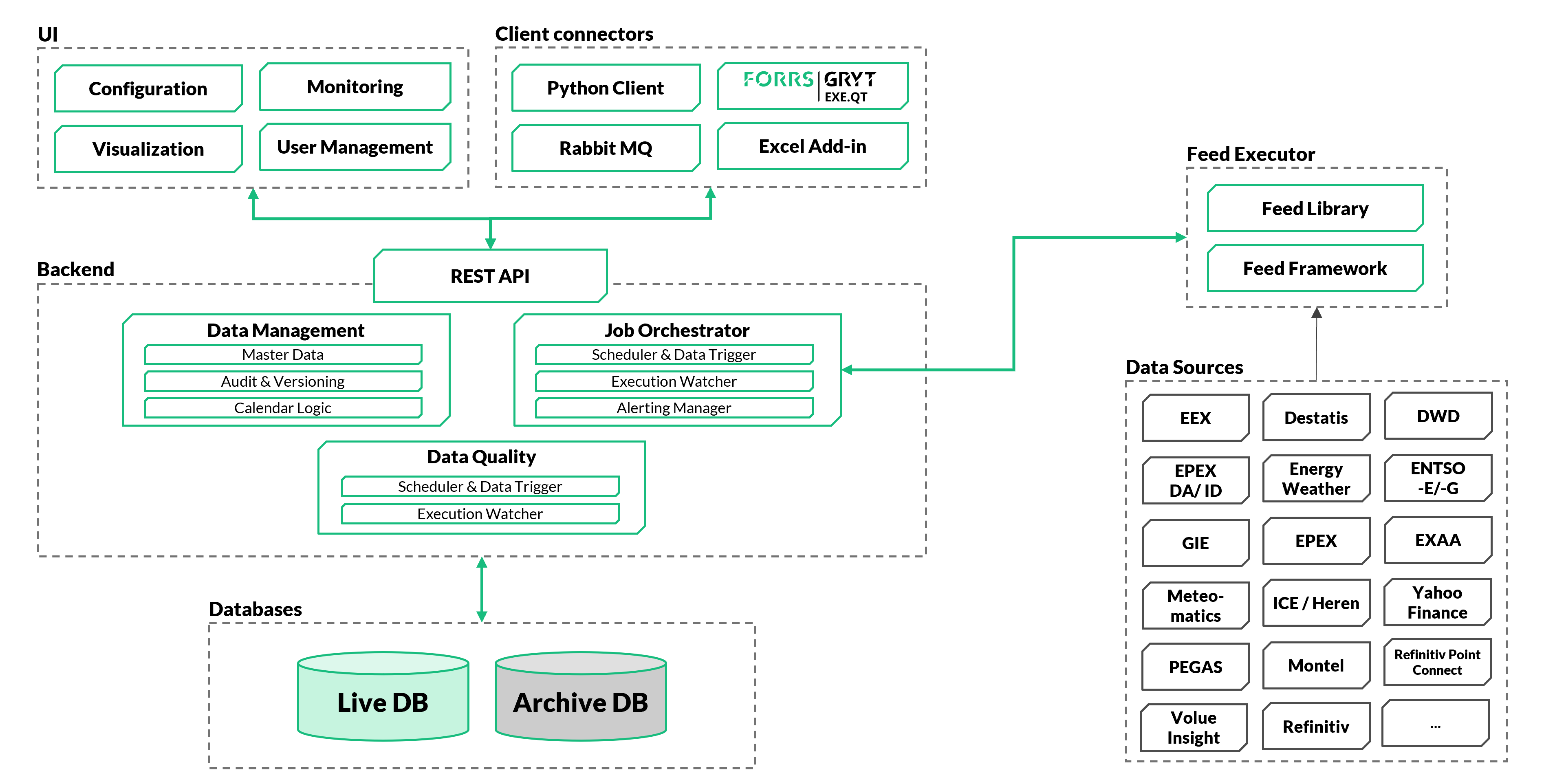
GRYT MDM.DATA runs on a WildFly application server and incorporates different application components via a service layer. Parallel to communication between the service layer and internal applications, external 3rd party applications can communicate with the service layer by using the system’s API with "RESTful" data transfers. Communication with the core database is performed via the Data Access Handler. Information on available data is published as messages on the message bus.
Highly customizable data import or export jobs can be defined for execution by the job handler to integrate various sources and information systems. During import execution, data is processed (pulled) and normalized according to an import job’s specification into a common GRYT MDM.DATA data format and structure. Execution of import jobs can be triggered automatically by the service of the scheduler application.
The data owner monitors and manages data in the web-based UI and can perform or schedule data exports to formats like Microsoft Excel or CSV. Furthermore, rule-based validations can be configured. The system architecture and its corresponding components are presented below.